
Permanent replacements for one tooth, several teeth, or a full arch, planned with 3D imaging at our Hillcrest office.
Dental Implants in San Diego, CA
Sedation Available
Same-Day Consults

A dental implant replaces a missing tooth from the root up. A small titanium post goes into the jawbone, the bone bonds to it over the following months, and a crown, bridge, or denture attaches on top. The result stays put when you chew and talk, and it gives the jaw back the pressure that keeps the bone in that spot from slowly shrinking.
At Sunrise Dental Arts in Hillcrest, Dr. Andy Keith, DDS plans and completes implant treatment for patients across San Diego, from a single front tooth to a full upper or lower arch. Every case starts with three-dimensional imaging and computer-guided planning, so you see your options, your timeline, and your estimate before you commit to anything. This page explains how implants work and which option fits which situation, with links to each treatment in more detail.
Request Appointment

How a Dental Implant Works
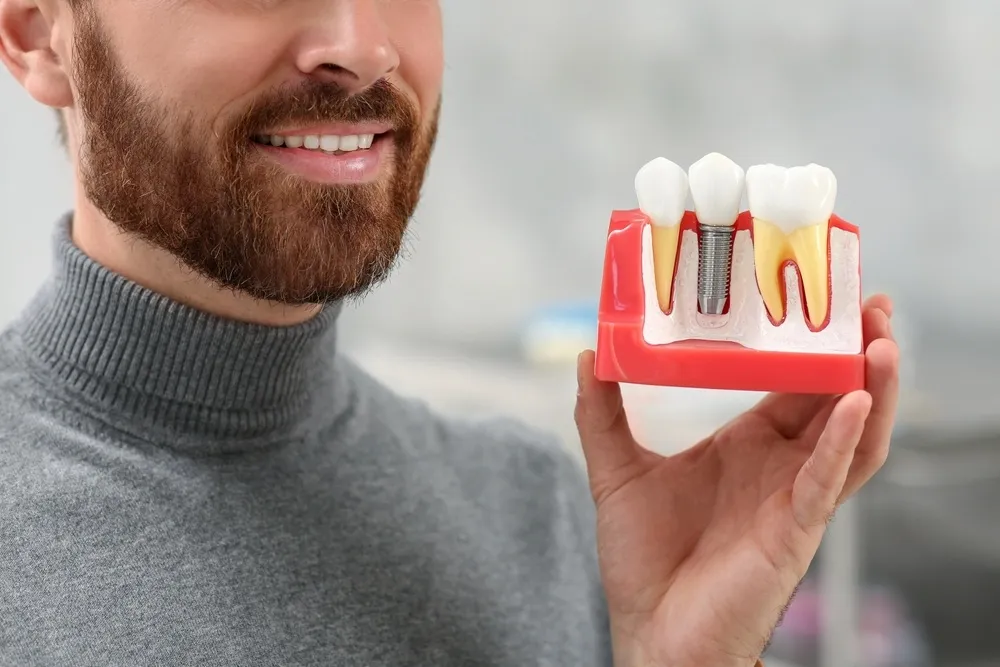
Each implant has three parts. The post sits in the bone where the root used to be. A connector called an abutment rises through the gum. The visible tooth, usually a custom crown, is fastened to the abutment. Because the post is held by bone rather than by suction, adhesive, or the teeth next to it, an implant tooth does not rock, slip, or need to come out at night.
The American Academy of Periodontology describes the same range of uses we see every week: one implant can replace a single tooth, several implants can replace a group of missing teeth, and a set of implants can support a full arch. The bone and gums around the implant decide how well it lasts, which is why healthy gums and enough bone are the first things we check.
Are You a Candidate for Dental Implants?
Most adults in good general health who are missing one or more teeth can be considered for implants. At your evaluation, we look at bone height and width on the 3D scan, the health of your gums, and medical factors that affect healing, such as uncontrolled diabetes. Active gum disease needs to be treated first, and thin bone may call for a graft or a different implant position.
Smoking and other tobacco use slow healing and raise the risk of problems around an implant, so we will talk with you about cutting back or quitting before surgery. Age on its own is rarely the deciding factor. Your overall health matters more, and many patients in their 60s, 70s, and beyond are good candidates.
Implant Treatment Options

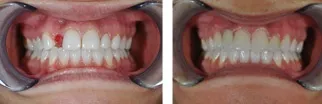
AF had been wearing a fake front tooth for several years and a previous dentist had placed porcelain crowns that were not to AF’s liking. We placed an implant in the gap and then placed 6 porcelain crowns. AF said it was a relief not to have to hide the unaesthetic teeth.
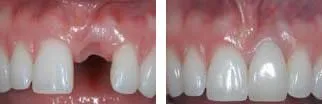
JJ lost her front tooth in an accident 3 years before I saw her. She wore a retainer with a tooth on it until she decided to do an implant.
What to Expect During Implant Treatment
Most single-tooth cases follow the same four stages. Larger cases add steps, but the order stays the same.
Consultation and 3D Planning
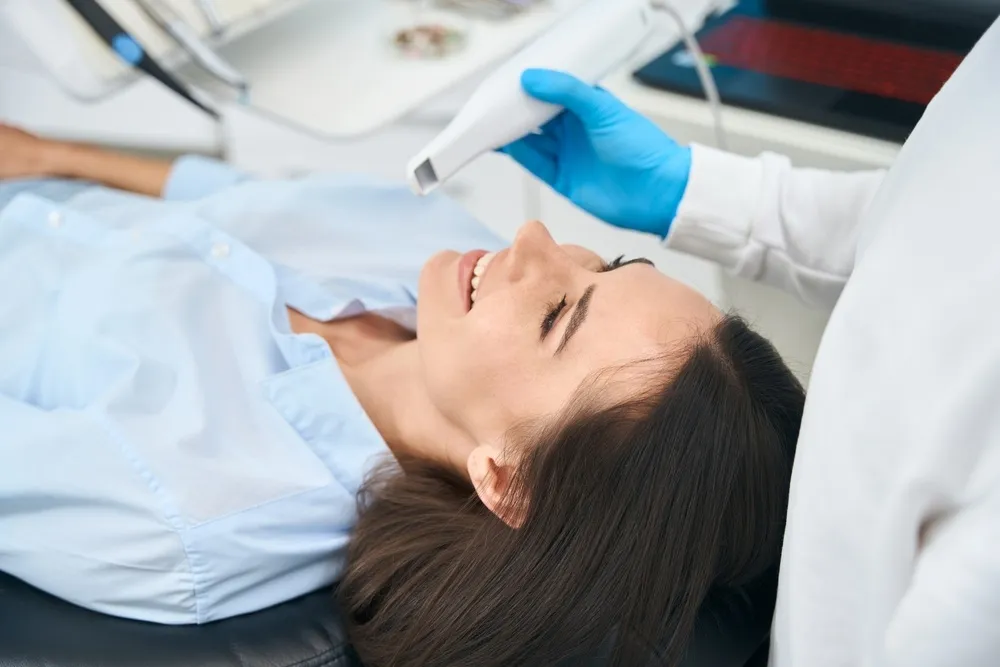
Dr. Keith examines your teeth and gums, takes three-dimensional images of the jaw, and reviews your health history. From the scan he plans the implant position and size, then walks you through the options and an estimate. Same-day consultations are often available.
Placing the Implant
Using the computer-guided plan, the post is placed under local anesthetic. If you would like to be more relaxed, we offer nitrous oxide, oral conscious sedation, and IV sedation. Any tooth that still needs to come out can often be removed at the same visit.
Healing and Bonding
The bone grows around the post in a process called osseointegration, which often takes three to six months. You may wear a temporary tooth during this time, and most people are back to normal routines within a few days of surgery.
Attaching Your New Tooth
Once the implant is stable, we attach the abutment and your custom crown, bridge, or denture, check your bite, and adjust it until chewing feels even on both sides.
Implants Compared With Bridges and Dentures
Implants usually cost more up front than a bridge or a denture, so it is fair to ask what you get for the difference. A dental bridge relies on the teeth beside the gap, which have to be shaped for crowns. Removable dentures sit on the gums and tend to loosen as the bone underneath slowly shrinks. An implant stands on its own and keeps loading the bone, which helps hold the shape of the jaw and keeps nearby teeth from drifting.
That does not make implants the right answer for everyone. A bridge can be quicker, and a denture can cost less when many teeth are missing. At your consultation we lay the options side by side, including what each one is likely to need in upkeep over the years, so you can weigh cost and comfort for yourself.
Caring for Your Implants at Home
An implant cannot get a cavity, but the gum and bone around it can become inflamed if plaque builds up. Brush twice a day, clean between teeth daily with floss or a water flosser, and keep your regular cleanings so we can check the tissue around each implant. If you grind your teeth at night, a night guard can protect the crown.
If you feel nervous about surgery, tell us early. Our sedation options range from nitrous oxide to IV sedation, and we will help you pick the level that fits your health and comfort.

Choose Sunrise Dental Arts for Dental Implants in San Diego
Dr. Keith plans each implant case around your bone, your bite, and your budget, and he explains the reasoning behind every recommendation. We are in-network with Delta Dental and can bill most other PPO plans out-of-network. We also offer financing through Cherry and CareCredit, and our team can review your benefits before treatment. See our payment options for details. We also see implant patients from Hillcrest, Mission Hills, Bankers Hill, Golden Hill, and South Park.
To find out which implant option fits you, meet Dr. Keith at our office at 3645 Fourth Ave in Hillcrest. Contact us online or call (619) 291-2980 to schedule your implant consultation.
Request Appointment
FAQs About Dental Implants
How much do dental implants cost in San Diego?
The cost depends on how many teeth are being replaced, whether you need an extraction or bone graft first, and what goes on top of the implant, such as a crown, bridge, or denture. After your exam and 3D scan we give you a written estimate before treatment begins. We are in-network with Delta Dental and can bill most other PPO plans out-of-network, and we offer financing through Cherry and CareCredit.
How long do dental implants last?
With good home care and regular checkups, the implant post can last for many years and often for life. The crown on top takes the daily wear of chewing, so it may need to be replaced at some point, much like any crown. Healthy gums, not smoking, and protecting your teeth from grinding all help.
Does getting a dental implant hurt?
The area is numbed with local anesthetic, so most patients feel pressure rather than pain during placement. We also offer nitrous oxide, oral conscious sedation, and IV sedation. Some soreness and swelling are common for a few days afterward and can usually be managed with over-the-counter pain relievers.
How long does the dental implant process take?
Placing the implant is a single visit, but the bone needs time to bond with it, often three to six months. A typical single-tooth case spans a few months from consultation to final crown. Extractions, grafting, or full-arch treatment can change the timeline, and we map it out for you at your consultation.
Am I too old for dental implants?
Age by itself is rarely the issue. Your general health, your medications, and the condition of your bone and gums matter more. Many older adults do very well with implants, and we may coordinate with your physician if you have a condition that affects healing.
Can dental implants replace more than one tooth?
Yes. Implants can replace a single tooth, support a bridge for several missing teeth, or anchor a full arch with All-on-4 dental implants, All-on-X, or implant overdentures. At your consultation, we recommend the approach that fits your mouth, your goals, and your budget.
