
Root canal therapy removes infection from inside a tooth, relieves the pain it causes, and lets you keep your natural tooth.
Root Canal Therapy in San Diego, CA
Sedation Available
Gentle Care
Same-Day Appointments

If a tooth throbs, aches when you bite, or stays sensitive long after something hot or cold, the nerve inside it may be inflamed or infected. Root canal therapy treats the problem from the inside. The infected pulp is removed, the canals are cleaned and sealed, and the tooth stays in place. It is often the best way to save a tooth that would otherwise need to come out.
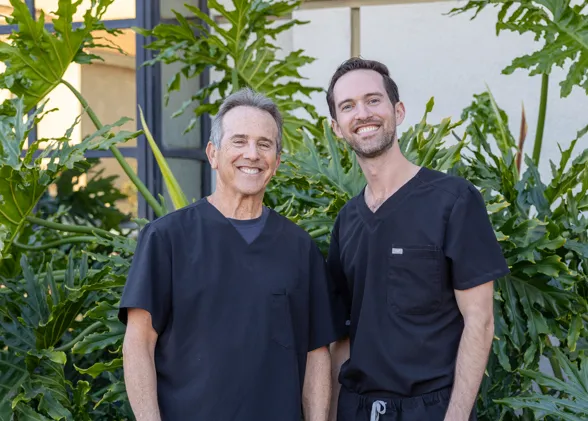
Dr. Andy Keith provides root canal therapy at our Hillcrest office as part of our restorative dentistry in San Diego, for patients from Hillcrest, Mission Hills, North Park, Bankers Hill, and nearby neighborhoods. Before we begin, we explain what the X-rays show, what the treatment involves, and how the tooth will be protected afterward.
Request Appointment

What Root Canal Therapy Does
Inside every tooth is a soft core called the pulp, which holds the tooth’s nerve and blood vessels. Deep decay, a crack, or an injury can let bacteria reach the pulp. Once the pulp is infected, it cannot heal on its own, and the infection can spread to the bone around the root.
The American Association of Endodontists describes a modern root canal as very similar to a routine filling, usually completed in one or two appointments. A fully developed tooth can keep working without its pulp because the tissues around the root continue to nourish it.
Signs You May Need a Root Canal
Some warning signs are obvious, and some are easy to dismiss. Call us if you notice any of these:
- Tooth pain that lingers, returns, or wakes you up at night
- Sensitivity to hot or cold that stays after the food or drink is gone
- A tooth that has turned darker than the teeth beside it
- Swelling, tenderness, or a small pimple-like bump on the gum near the tooth
- A cracked or chipped tooth, especially one that hurts when you bite
Not every toothache means a root canal, which is why an exam and X-rays matter. Waiting can let the infection progress to the point where a tooth extraction becomes the only option.
What Happens During a Root Canal
First, we take X-rays to see the shape of the roots and whether infection has reached the surrounding bone. The tooth is then numbed with local anesthetic. Once you are comfortable, Dr. Keith makes a small opening in the top of the tooth, removes the infected pulp, and cleans and shapes each canal.
The canals are then filled and sealed to keep bacteria out. Depending on the tooth and the extent of the infection, treatment is finished in one visit or split into two.
Protecting the Tooth Afterward
A tooth that has had a root canal, especially a back tooth, is more likely to crack, so we usually recommend a porcelain crown to protect it. Most patients are back to normal activities the same day or the next, with some tenderness for a few days.

Is Root Canal Therapy Painful?
Root Canal Treatment Step by Step
- Exam and X-Rays
- Numbing and Comfort
- Cleaning and Sealing the Canals
- Crown or Final Filling
- Healing Check
Exam and X-Rays
We start by examining the tooth, checking how it responds to cold and tapping, and taking X-rays. This tells us whether the pulp is infected, whether the tooth can be saved, and whether a root canal or another treatment is the better choice.
Numbing and Comfort
Before treatment, we numb the tooth and surrounding gum and confirm it is numb before starting. If you feel nervous, nitrous oxide, oral conscious sedation, or IV sedation can be added, and we review your health history to choose the right option.
Cleaning and Sealing the Canals
Dr. Keith opens the top of the tooth, removes the infected pulp, and cleans, shapes, and disinfects each canal. The canals are then filled with a rubber-like material and sealed so bacteria cannot get back in.
Crown or Final Filling
A temporary filling closes the opening until the tooth gets its final restoration. Back teeth usually need a crown to protect them from cracking, while some front teeth can be restored with a filling. We will tell you which your tooth needs and when.
Healing Check
The tooth may feel tender for a few days as the tissue around it settles, and over-the-counter pain relievers usually help. At your follow-up visit, we check healing on X-rays and make sure the restoration fits your bite. Call us if swelling returns or the pain gets worse instead of better.
Paying for Root Canal Treatment
Many dental insurance plans cover part of root canal treatment and the crown that follows. Coverage, deductibles, and waiting periods vary by plan, so our team can check your benefits and give you an estimate before treatment.
We are in-network with Delta Dental and can bill most other PPO plans out-of-network. For the remaining balance, we offer payment options including Cherry and CareCredit financing, which let you spread the cost into monthly payments.
If cost is a concern, tell us. We would rather talk through your options than have you put off treatment for a tooth that is getting worse.

When Tooth Pain Can’t Wait
Severe pain, swelling in your face or jaw, or a fever along with a toothache can be signs that an infection is spreading. Call us right away if you notice any of these. Same-day appointments are often available for urgent problems, and our dental emergencies page explains what to do if something happens after hours.
Treating an infected tooth early gives you the best chance of saving it. Our office at 3645 Fourth Avenue in Hillcrest is open Monday through Wednesday from 8 a.m. to 5 p.m. and Thursday from 7 a.m. to 3:30 p.m.
Schedule a Root Canal Evaluation in San Diego
If a tooth is hurting, or another dentist has told you it needs a root canal, Dr. Andy Keith can examine it, confirm what is going on, and explain your options for saving it.
Contact our office online or call (619) 291-2980 to request an appointment.
Request Appointment
FAQs
How long does a root canal take?
Most root canals are completed in one or two visits. Front teeth usually have a single canal and tend to be quicker, while molars have several canals and take longer. If the infection is severe, we may place medication in the tooth and finish at a second visit.
Will I need a crown after my root canal?
Usually, if it is a back tooth. Molars and premolars take heavy chewing forces and are more likely to crack after a root canal, so a crown is often recommended. Some front teeth can be restored with a filling instead, and we will let you know which your tooth needs.
How do I know if I need a root canal?
Lingering sensitivity to hot or cold, pain when biting, a tooth that has darkened, or a bump on the gum near a tooth are common signs. The only way to know for sure is an exam and X-rays, so call us if you notice any of them.
Can I drive myself home after a root canal?
If you only have local anesthetic, most patients drive themselves home. If you choose oral conscious sedation or IV sedation, you will need someone to drive you home.
How do I manage soreness after a root canal?
Some tenderness for a few days is normal. Over-the-counter pain relievers, taken as directed, usually keep it under control, and chewing on the other side gives the tooth time to settle. If you clench at night, a night guard may help. Call us if pain or swelling gets worse after the first few days.
Is pulling the tooth a better option than a root canal?
When a tooth can be saved, keeping it is usually the better choice. A missing tooth generally needs to be replaced with an implant or bridge to keep the neighboring teeth from shifting. If a tooth is too damaged to save, we will tell you and plan the replacement with you.
